- November 13 2026
- Food safety
How do pathogenic bacteria contaminate food, and why is their detection essential?
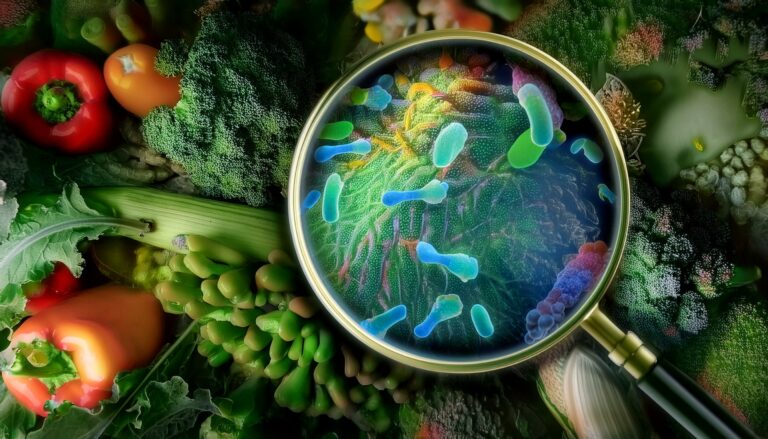
Each year, pathogenic bacteria present in food represent a major issue for the entire agri-food chain. Among the most monitored are Salmonella, Listeria monocytogenes and certain strains of Escherichia coli (E. coli), responsible for numerous food contaminations around the world. These microorganisms can be introduced at different stages of food production, transport or storage. Faced with ever stricter regulatory requirements and consumers increasingly attentive to the safety of the products they consume, companies must implement effective microbiological controls. The rapid and reliable detection of food-borne pathogens has become an essential element in ensuring safety, protecting public health, and maintaining consumer confidence. But how do we differentiate between useful and pathogenic bacteria? What risks do they pose for businesses and consumers? How can they contaminate food?
Summary
1. What are the main bacteria present in food?
2. Why do these bacteria represent a major challenge for companies and consumers?
3. How can bacteria contaminate food?
Conclusion : Pourquoi la détection précoce des bactéries est-elle devenue incontournable ?
1. What are the main bacteria present in food?
The terms "bacteria in food" can often be associated with elements that pose risks to humans. But it is important to remember that not all of them are dangerous. Indeed, certain bacteria play an essential role in our daily diet and contribute to the manufacture of the products we consume. These bacteria are called beneficial bacteria. Conversely, pathogenic bacteria can pose a health hazard when present in food.
Beneficial bacteria vs pathogenic bacteria
So-called “beneficial” bacteria are sought after by manufacturers in the production of their products. They are involved in the processing of raw materials and in fermentation processes, which are increasingly being adopted in alternative products. Beneficial microorganisms are sought after by food manufacturers for their technological properties. Certain bacteria and yeasts are involved in fermentation processes1 and contribute to the development of taste, texture, preservation or even nutritional characteristics of many foods such as yoghurts, cheeses or fermented products. These bacteria also contribute to the microbiological quality of products by limiting the development of undesirable micro-organisms and contributing to their stability during storage. Among these useful bacteria we can mention Lactobacillus2 or Streptococcus3.
Pathogenic bacteria4 are microorganisms capable of causing disease in humans, animals, or plants. Through various biological mechanisms, they can invade their host, disrupt its normal functioning, and cause infections that can sometimes be severe. In the agri-food sector, their presence poses a major challenge to public health and food microbiological safety.
This is why companies in the sector are subject to particularly strict regulations. In Europe, for example, EC Regulation No 2073/20055 defines, among other things, the microbiological criteria applicable to food products. Precise protocols must be followed at every stage of production to ensure that products meet health standards. The detection of pathogenic bacteria is a meticulous and critical process: the results of these analyses often determine whether or not batches intended for sale are released.
The different types of pathogenic foodborne bacteria
Among the pathogenic bacteria that may be present in food and cause serious consequences, some require close monitoring due to the risks they pose. Detecting these bacteria is a major challenge for food industry stakeholders, who must adhere to specific standards and regulations.
Before releasing batches onto the market, manufacturers test their products to ensure their microbiological compliance. To this end, several bacteria are primarily examined:
Listeria monocytogenes
Listeria monocytogenes6 is one of the best-known pathogenic bacteria in the food industry. It is closely monitored in prepared foods, and its presence is far from rare in deli meats or unpasteurized dairy products. Listeria has a strong ability to survive and grow at low temperatures. Listeriosis infections are common, with 400 to 500 cases per year in France and a high mortality rate7. The most vulnerable populations, such as pregnant women, elderly people, and other at-risk individuals, may be the hardest hit
Escherichia coli (E. coli)
Bacteria such as Escherichia coli8 are naturally present in the digestive systems of humans and warm-blooded animals. Most strains are harmless and even contribute to the proper functioning of the gut flora. However, certain pathogenic strains can cause digestive disorders—sometimes severe—and are responsible for foodborne illnesses.
These bacteria are primarily associated with undercooked ground meat, raw products, or foods that have been cross-contaminated9 during preparation. Detecting them is essential for preventing foodborne illnesses.
Salmonella
Salmonella10 is one of the main bacteria responsible for foodborne illness outbreaks. After ingesting contaminated food, infected individuals may develop symptoms such as diarrhea, fever, abdominal pain, or vomiting. In some cases, the infection may require hospitalization.
Young children, whose immune and digestive systems are still developing, are among the most vulnerable populations. However, adults can also be affected, with the severity of the illness varying depending on their overall health and the specific strain involved.
Poor handling and storage conditions can also contribute to the spread of bacteria. For example, a break in the cold chain or inadequate cleaning of equipment can allow Salmonella to grow and spread within the production environment. These situations increase the risk of food contamination and can have significant consequences for consumer health as well as for the businesses involved.
D'autres bactéries ...
In addition to the pathogens well known to the general public, other bacteria also pose potential threats to food safety. These include, in particular, Bacillus cereus11, Staphylococcus aureus12, shiga toxin-producing E. coli (STEC)13, Campylobacter14 and Cronobacter15. Testing for these bacteria generally focuses on the food categories at highest risk.
Cronobacter receives particular attention in the area of infant nutrition due to the potential consequences it can have, especially for infants. As with other foodborne pathogens, testing relies on rigorous microbiological analyses that enable manufacturers to ensure the safety of products intended for consumers.
Thus, while pathogenic bacteria are diverse and have different characteristics, they all have one thing in common: controlling them is an essential component of food safety and the protection of public health.
2. Why do these bacteria represent a major challenge for companies and consumers?
What are the impacts of contamination on businesses?
The presence of pathogenic bacteria such as Salmonella, Listeria monocytogenes, or certain strains of Escherichia coli (E. coli) poses a major challenge for companies in the food industry. These microorganisms can contaminate not only raw materials but also finished products, leading to significant financial, operational, and reputational consequences.
Consumer food safety16 is a central concern. When a contaminated product is sold, it can cause food poisoning—sometimes severe—forcing the company to issue product recalls. These operations incur significant costs associated with product withdrawal, crisis management, and communication with authorities and customers.
Companies also face regulatory penalties17 if they fail to comply with the microbiological testing requirements imposed by health authorities. To ensure product compliance, manufacturers must implement reliable detection methods that are often validated according to recognized standards such as AFNOR.
Beyond regulatory considerations, contamination can have a lasting impact on a company’s brand image. In a climate where consumers are increasingly concerned about food safety, a widely publicized food safety incident can lead to a loss of trust and a decline in sales for several months, or even several years.
Microbiological contamination directly disrupts industrial operations. It can lead to the temporary shutdown of a production line¹⁸, the destruction of entire batches of products, or an increase in quality control checks prior to market release. Industry stakeholders are therefore seeking rapid detection solutions—particularly those based on real-time PCR—to reduce analysis times, limit economic losses, and make decisions more quickly. As a result, managing microbiological risks is no longer merely a regulatory requirement. Today, it is a genuine strategic imperative that enables companies to protect their consumers, their reputation, and their economic performance.
What are the potential consequences for consumers?
The presence of pathogenic bacteria in food poses a direct threat to consumer health. Among the main causes of foodborne infections are the pathogenic bacteria mentioned above. When ingested through contaminated food, these bacteria can cause illnesses whose severity varies depending on the health status and age of those affected.
The most common symptoms19 are gastrointestinal disturbances such as nausea, vomiting, or fever. Although these symptoms usually subside after a few days in healthy individuals, some infections may require medical treatment and lead to hospitalization.
The most vulnerable groups are young children, the elderly, pregnant women, and immunocompromised individuals. For these individuals, complications can be more severe. For example, a Listeria monocytogenes infection can lead to neurological complications or affect the course of a pregnancy, while certain strains of E. coli can cause severe kidney damage. Beyond the impact on health, foodborne illnesses can also have economic and social consequences for consumers.
To limit such contamination, it is essential that stakeholders in the food chain implement rigorous microbiological control procedures and use rapid and reliable detection methods. These tests enable the early identification of pathogens and ensure that products placed on the market meet food safety requirements.
3. How can bacteria contaminate food?
Potential contamination throughout the food chain
Bacteria can be introduced into food as early as the initial stages of production. Certain raw materials may be naturally contaminated by the environment, particularly by animals, soil, water, or even the air. These microorganisms can then end up in processing plants if production conditions are not adequately controlled.
The production environment is also a major source of contamination. Poorly cleaned surfaces, inadequately disinfected equipment, damp areas that promote microbial growth, or the incorporation of contaminated ingredients during the manufacturing process can all contribute to bacterial growth. The implementation and adherence to an effective Hazard Analysis and Critical Control Points (HACCP)20 plan are therefore essential for identifying and controlling microbiological factors related to food safety.
The role of human handling and cross contamination
The human factor is one of the main causes of food contamination. Inadequate handwashing and failure to follow hygiene procedures or safety protocols can lead to the introduction of bacteria into food.
Cross-contamination also poses a major risk. It occurs when a contaminated product comes into contact with a safe product, either directly or indirectly. This can happen, for example, when raw products come into contact with finished products, when production lines are not properly segregated, or when equipment is not cleaned between operations.
Finally, transportation and storage play a critical role. A break in the cold chain21, improper storage temperatures, or poor storage conditions can accelerate bacterial growth and compromise food safety.
Factors that promote bacterial growth
Bacterial growth depends directly on several physicochemical parameters, including temperature, moisture, pH, and storage time.
Water is essential for bacterial growth. Bacteria multiply more easily when water activity (Aw) is high22, generally above 0.95. Foods with high moisture content therefore provide a favorable environment for bacterial growth. Conversely, dry foods or those with very low moisture content—such as uncooked rice, dry pasta, dried beans, or honey—significantly limit bacterial growth.
pH also affects bacterial survival²³. Most pathogenic bacteria thrive in environments close to neutrality. Conversely, more acidic foods, such as those containing vinegar or certain fermented products, provide a less favorable environment for their growth.
Controlling these parameters, combined with regular microbiological testing, enables manufacturers to prevent food contamination and ensure the safety of the products they bring to market.
Conclusion : Why has early detection of bacteria become essential?
Pathogenic bacteria pose a major challenge for the food industry today. Although invisible to the naked eye, they can have significant consequences for consumer health and business operations. Pathogenic bacteria can be found at various stages of the production chain, making preventive measures essential.
To mitigate these risks, professionals must adhere to rigorous hygiene, storage, and quality control practices. However, prevention alone is not always sufficient. In a context where regulatory requirements and consumer expectations are constantly rising, the ability to rapidly identify the presence of pathogenic bacteria has become a key element of food safety.
Early detection not only allows action to be taken before contamination spreads, but also reduces economic losses, protects companies’ reputations, and ensures that safe products reach the market. This is why microbiological detection methods now play a central role in the food safety control strategies of food and beverage manufacturers.
1. Fermentation bactérienne : mécanismes et applications – Santé Humaine. https://santehumaine.fr/fermentation-bacterienne/ (2026).
2. Lactobacillus spp. – Classification, Characteristics, Habitat, Culture, Pathogenicity. https://studymicrobio.com/lactobacillus-spp-classification-characteristics-habitat-culture-pathogenicity/.
3. Streptocoques A et B : symptômes, traitement, prévention – Institut Pasteur. https://www.pasteur.fr/fr/votre-sante/comprendre-les-maladies/les-maladies-de-z/streptocoques-et-b.
4. SFI. Bactérie pathogène alimentaire : Qu’est-ce que c’est et comment les éviter ? https://www.nelinkia.com/blog/lexique/bacterie-pathogene.html.
5. L_2005338FR.01000101.xml. https://eur-lex.europa.eu/eli/reg/2005/2073/oj/eng.
6. Qu’est-ce que la listériose et comment s’en prémunir ? | Agence nationale de sécurité sanitaire de l’alimentation, de l’environnement et du travail. https://www.anses.fr/fr/content/quest-ce-que-la-listeriose-et-comment-sen-premunir (2022).
7. Biancarelli, E. Listéria : Comment éviter cette infection alimentaire dangereuse qu’est la listériose ? Sante Nova https://www.sante-nova.fr/listeria-comment-eviter-cette-infection-alimentaire-dangereuse-quest-la-listeriose/ (2025).
8. Escherichia coli : symptômes, traitement, prévention – Institut Pasteur. https://www.pasteur.fr/fr/votre-sante/comprendre-les-maladies/les-maladies-de-z/escherichia-coli-enterohemorragiques-eceh.
9. Contamination croisée : comprendre le phénomène. Méthode HACCP https://methodehaccp.com/plan-haccp/contamination-croisee/ (2026).
10. Salmonellose : symptômes, traitement, prévention – Institut Pasteur. https://www.pasteur.fr/fr/votre-sante/comprendre-les-maladies/les-maladies-de-z/salmonelloses.
11. Qu’est-ce que Bacillus cereus et comment s’en prémunir ? | Agence nationale de sécurité sanitaire de l’alimentation, de l’environnement et du travail. https://www.anses.fr/fr/content/qu-est-ce-que-bacillus-cereus-et-comment-s-en-premunir.
12. Staphylocoque : symptômes, traitement, prévention – Institut Pasteur. https://www.pasteur.fr/fr/votre-sante/comprendre-les-maladies/les-maladies-de-z/staphylocoque.
13. E. coli producteurs de shigatoxines (STEC) : définitions, virulence et propriétés des souches entérohémorragiques (EHEC). | Santé publique France. https://www.santepubliquefrance.fr/syndrome-hemolytique-et-uremique-pediatrique/article/e-coli-producteurs-de-shigatoxines-stec-definitions-virulence-et-proprietes-des-souches (2012).
14. Campylobactériose | Agence nationale de sécurité sanitaire de l’alimentation, de l’environnement et du travail. https://www.anses.fr/fr/article/campylobacteriose.
15. Fiche de description de danger biologique transmissible par les aliments : ‘Cronobacter spp.’ – Février 2020 | Agence nationale de sécurité sanitaire de l’alimentation, de l’environnement et du travail. https://www.anses.fr/fr/document/fiche-description-danger-biologique-transmissible-aliments-cronobacter-spp-fevrier-2020 (2021).
16. Sécurité sanitaire des aliments : comment la science protège la santé des consommateurs | Agence nationale de sécurité sanitaire de l’alimentation, de l’environnement et du travail. https://www.anses.fr/fr/actualite/securite-sanitaire-aliments-comment-science-protege-sante-consommateurs.
17. jcdadmin. Sécurité alimentaire : quelles sanctions en cas de non-respect des règles ? – Laboratoire d’Hygiène Local. https://lhl.fr/blog/securite-alimentaire-quelles-sanctions-en-cas-de-non-respect-des-regles/ (2025).
18. Risques microbiologiques dans les lignes de production – Cabinet Sécurité Alimentaire. https://cabinet-securite-alimentaire.com/risques-microbiologiques-dans-les-lignes-de-production/ (2026).
19. Toxi-Infections Alimentaires Collectives (TIAC). https://www.centre-val-de-loire.ars.sante.fr/toxi-infections-alimentaires-collectives-tiac (2026).
20. Méthode HACCP 2026 : le guide complet (7 principes, 12 étapes). Méthode HACCP https://methodehaccp.com/methode-haccp-guide-complet/ (2026).
21. Sécurité sanitaire des aliments : tout sur la chaîne du froid | Ministère de l’Agriculture, de l’Agro-alimentaire et de la Souveraineté alimentaire. https://agriculture.gouv.fr/securite-sanitaire-des-aliments-tout-sur-la-chaine-du-froid.
22. Affairs, O. of R. Water Activity (aw) in Foods. FDA https://www.fda.gov/inspections-compliance-enforcement-and-criminal-investigations/inspection-technical-guides/water-activity-aw-foods (2018).
23. Quel est le lien entre le pH et la prolifération des micro-organismes ? https://fr.scienceaq.com/Biology/1001200868.html.